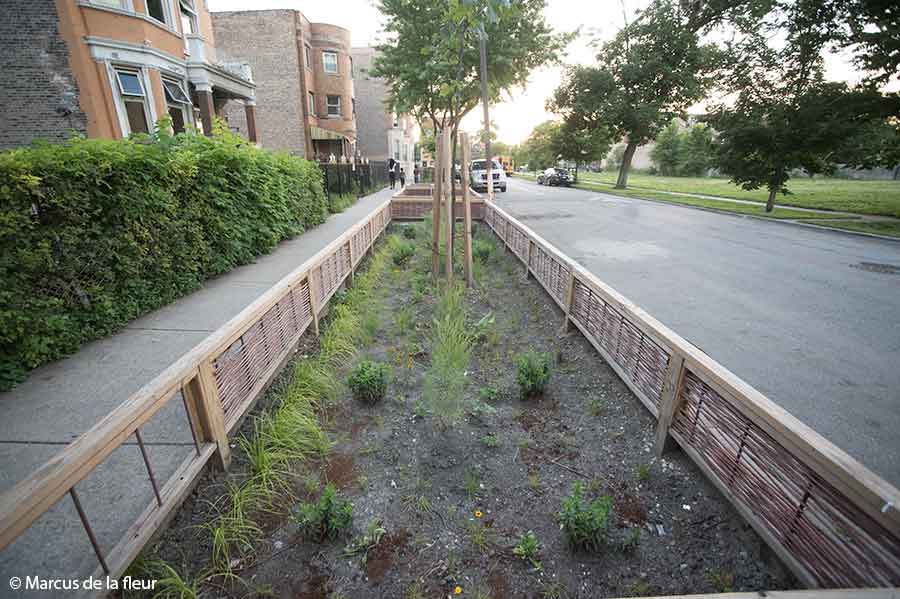
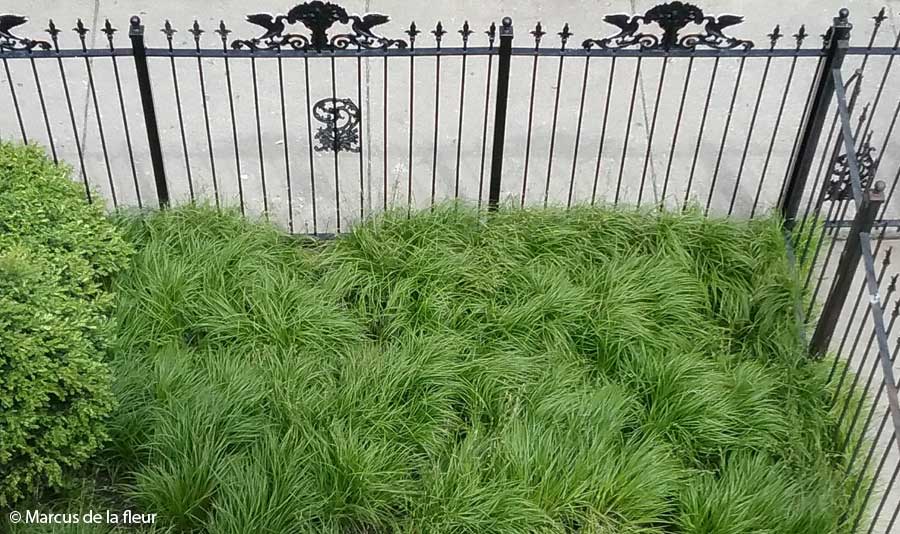
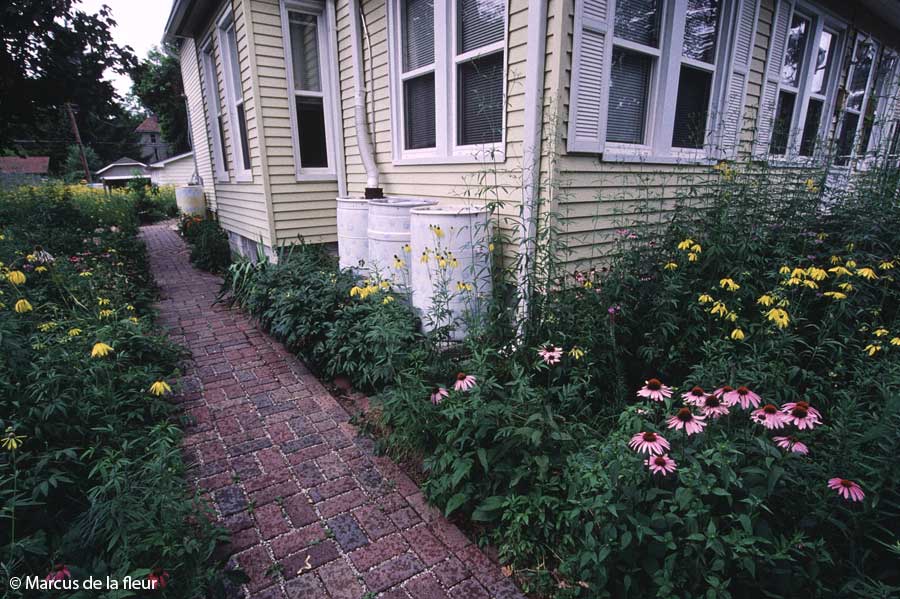
I had high expectations. When I planted sedges (Carex sprengelii) in our front yard in 2011, they grew to their mature size within a few weeks and provided an almost instant ground cover.
I was leaning on that pleasant experience, expecting that our freshly planted rain garden cells in the parkway would perform the same way. I was in for a rude awakening.
It felt like everything we planted was sitting there forever like on the first day, not putting on any growth at all, or at slower than a snail’s pace. The plants didn’t die, but they didn’t grow, either.
I blamed the summer. It was very dry, and the little rain we got basically just kept things alive. I actually purged my rain barrel into the rain garden whenever it was full in a desperate attempt to provide emergency care.
The plantings did not take off until we got some decent rains in late summer. And by that time they were so stressed that they were cautious about how much growth they should put on.
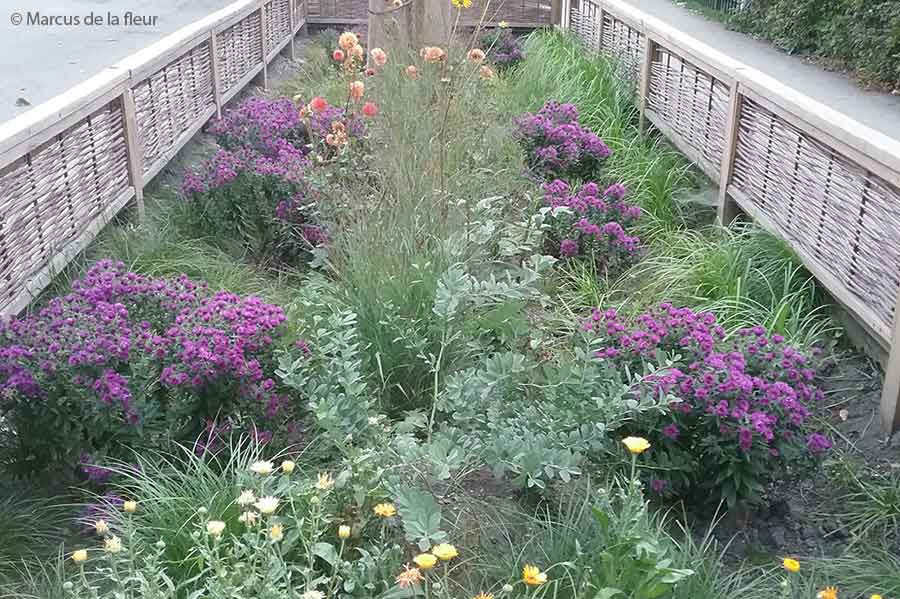
Well, sitting on my front porch watching my rain garden flourish was a pipe dream in 2017. Maybe we’ll have more luck this season.
Cabin fever season did peak during this years never ending winter! My preferred antidote was: Dream about spring and gardening. Or, as it is in my case – planting. Join me on a trip back to late spring last year when I was planting the three rain garden cells in our parkway.
I had put some thought into what I would plant and why. And at the end of the 2016 season I couldn’t resist putting the first perennials and geophytes into the ground.
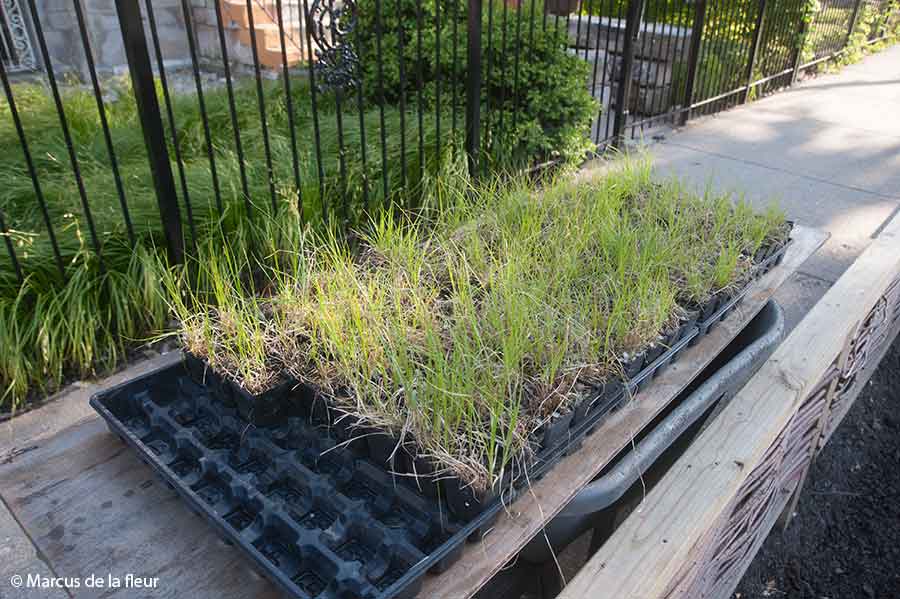
In May of 2017, it was time to wrap up the rain garden planting. And I was prepared! I had pre-grown my sedges. My species of choice were Carex sprengelii (Long-beaked Sedge) and Carex vulpinoidea (Fox Sedge).
Not all our native sedges are suitable for a garden environment or tough enough to handle urban pressures. These two fellows (C. sprengelii and C. vulpinoidea) have turned out to be fairly resilient and have been strong performers in rain gardens. Not only that, but their beautiful fine textured foliage can only be described as eye candy.
Trapped in the plug sized trays, the sedges were screaming to be set free. Who can deny that request? If you’re a plant nerd, then you know what I am talking about.
I placed flags in the rain garden at the location of the structural perennials – as place holders – and planted the sedges at 12 inches on center across the rain garden. They provide the ground cover and act as the functional framework for the rain garden.
Also part of the ground cover matrix were two other species, Carex blanda (Common Wood Sedge) and Geranium maculatum (Wild Geranium).
I had a tray of pre-grown Carex blanda. As the common name suggests, this sedge can be found in our woodlands. This robust little fellow also does well in partial shade and partial sunny locations. I placed them at around the base of the Oak and Shagbark Hickory.
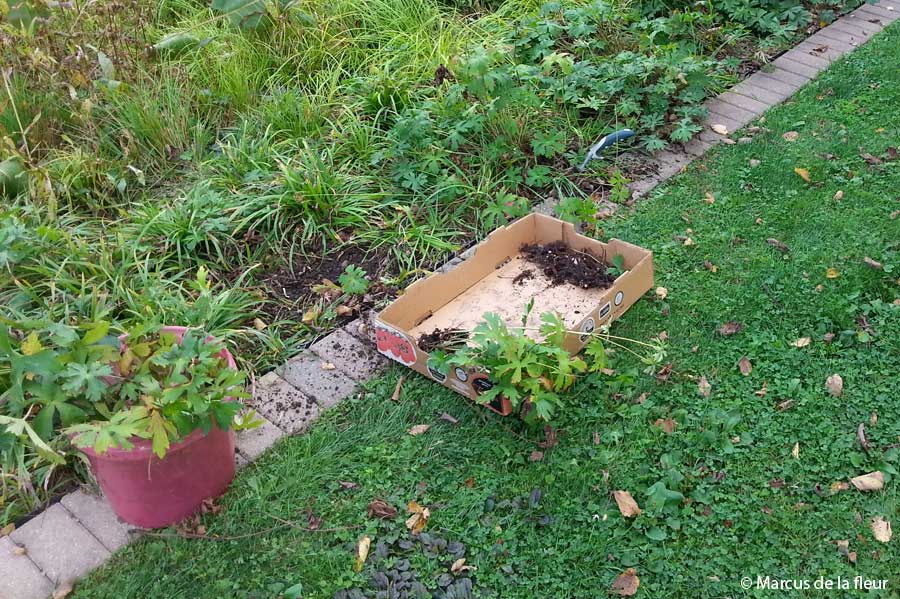
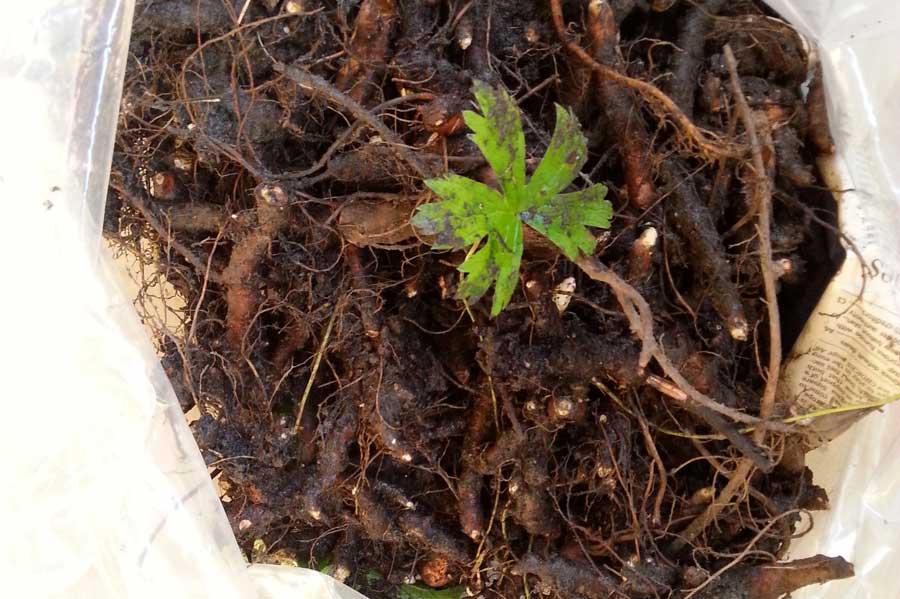
The Geranium maculatum came from a client of mine. She had them literally exploding in her rain garden and offered me the chance to harvest a bucket full of rhizomes.
The Wild Geraniums are superbly robust and accept an amazingly wide spectrum of growing conditions. They are also one of the native species that sprinkle a beautiful touch of color across your rain garden in spring. But that is not the end of it! They rise to notoriety again in fall when their foliage turns a beautiful red. In short, Geranium maculatum is a good and reliable performer.
My last step was to plant the structural perennials. Well, those that were still missing. Last fall I planted the Amsonia hubrichtii (Blue Star) and Baptisia australis (Blue Wild Indigo). Those still missing were:
Silphium terebinthinaceum (Prairie Dock),
Panicum virgatum ‘Shenandoah’ (Switchgrass),
Symphyotrichum novae-angliae ‘Purple Dome’ (New England Aster).
These I did not grow myself, but rather purchased them from local nurseries. And I purchased them in one gallon sized containers to give them a little head start in the competition with the sedges.
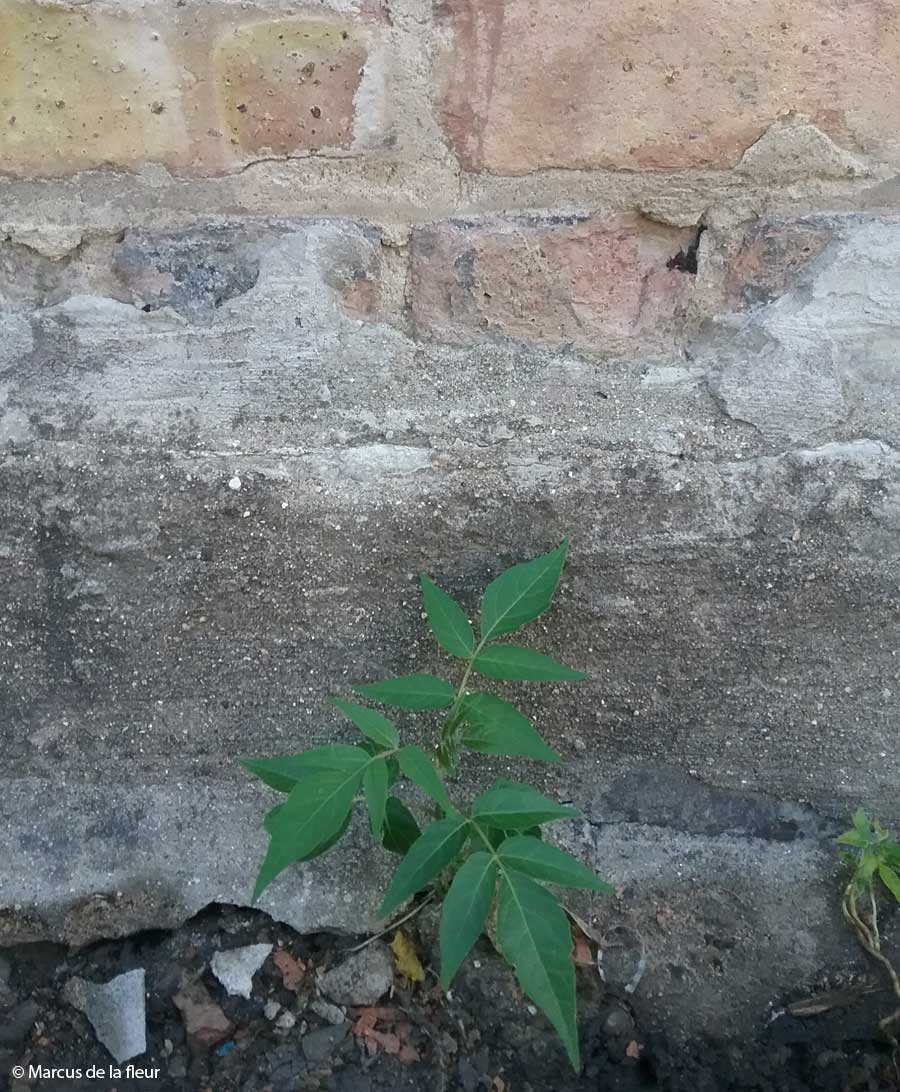
Well, that’s what I like to call them. But their common name is Tree of heaven, while your horticulturist or arborist may refer to their proper botanical name: Ailanthus altissima.
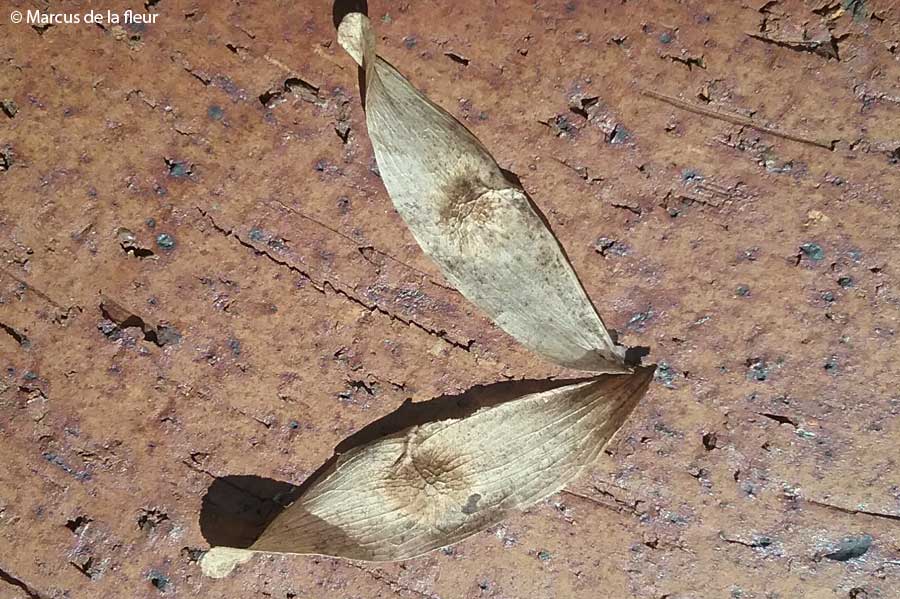
Why don’t I like this species? Because they are the quintessential weed tree. They produce seeds in large numbers that readily germinate. Those that survive and grow on are usually in undisturbed places, right along building foundations, path edges, fence lines, etc.
You blink once and the tender seedling has grown into a small plant. You turn your head away for too long, and the small plants explodes into a small tree. They do this so fast that people often give up removing them because they now seem to big to rip out.
And it’s not just the Tree of heaven. Other common weed tree species that exhibit this tendency are Mulberry trees, Elm trees, and some maples.
We had one massive Tree of heaven and a Mulberry tree at the northwest corner of our house with roots all the way into our basement. Both trees made me real nervous and I had them taken down.
All I had left now was one larger Tree of heaven in the southeast corner of our vacant lot that I wanted to see go too.
Please don’t conclude that I just don’t like trees. I do like them, but they need to be in the right place and a suitable species. Cathy and I were eager to have an apple tree in that back corner, so calling in the chain saw wasn’t a hard decision.
To make sure the Tree of heaven doesn’t grow back from the stump we spent a few extra dollars and had it ground out. I remember digging up stumps like this in the old days. But I have to admit, I like standing near the stump grinder and watching the wood chips fly much better!
I finished the hardscape components of our parkway rain gardens just before winter came knocking on our door. The softscape installation, i.e. planting the rain garden, had to wait till the start of the next growing season. That would have been the rational approach.
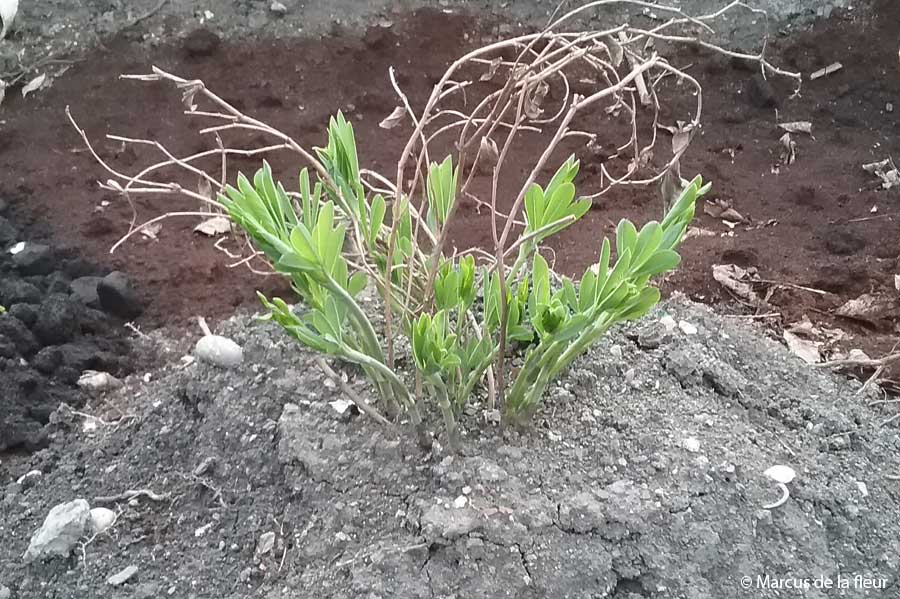
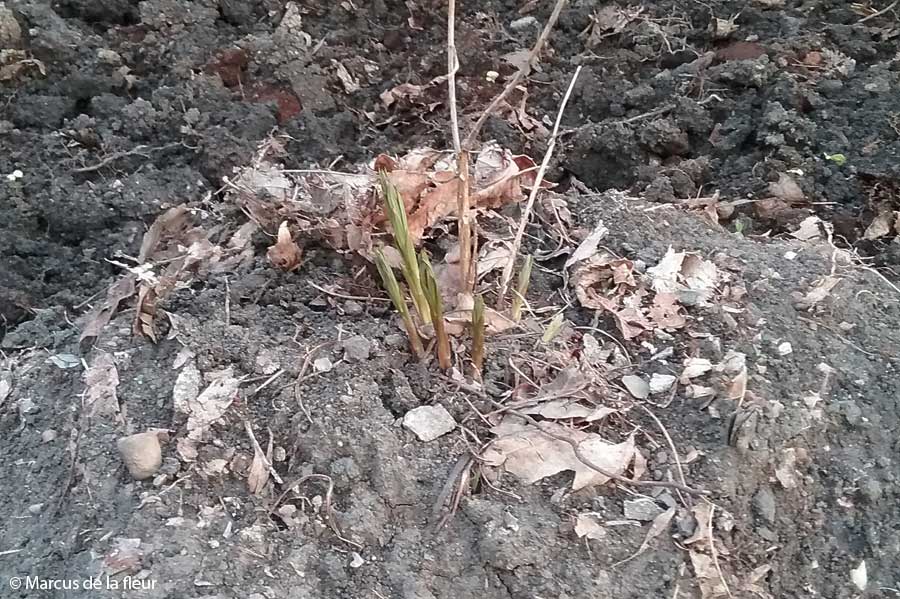
But my green thumbs were itching so badly that I had to scratch away at rational – at least a little bit. So I went ahead and planted two Baptisia australis for an early summer show and two Amsonia hubrichtii for texture fall interest. Despite the late fall planting, both species came out the gates in a strong fashion in earlier spring.
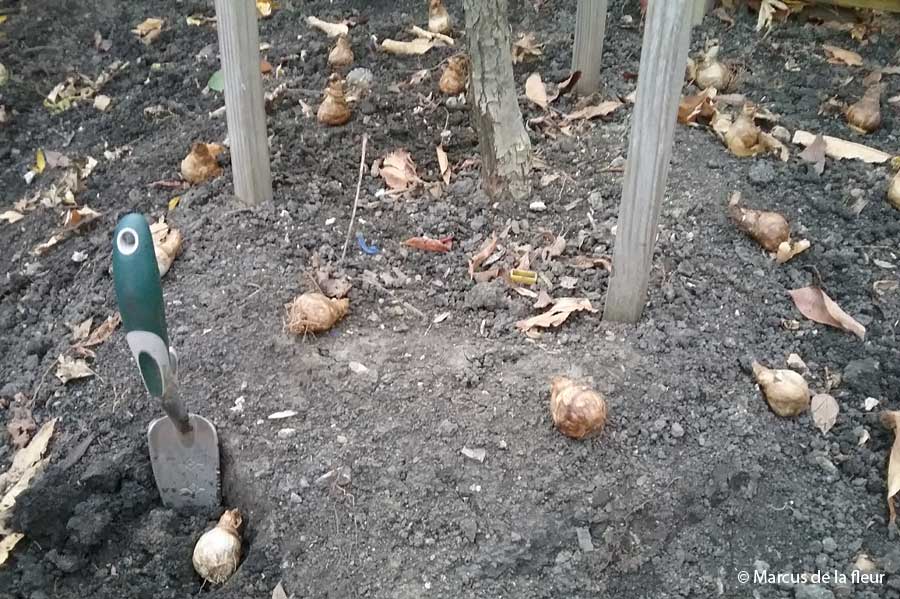
The one rational panting I indulged in late last fall where my friends the geophytes. Cathy scored a bag of daffodils and alliums, which needed to hit the ground in autumn.
In our trilogy of parkway rain gardens, I had one more cell to go, which is also the largest cell. Snow was looming on the horizon and I was hoping to finish the weaving of the fence panels before I would freeze my fingers off.
Well, I got done just in time, but I had to wait all winter before I could fully vegetate the rain garden cell. This was a test of my patience.
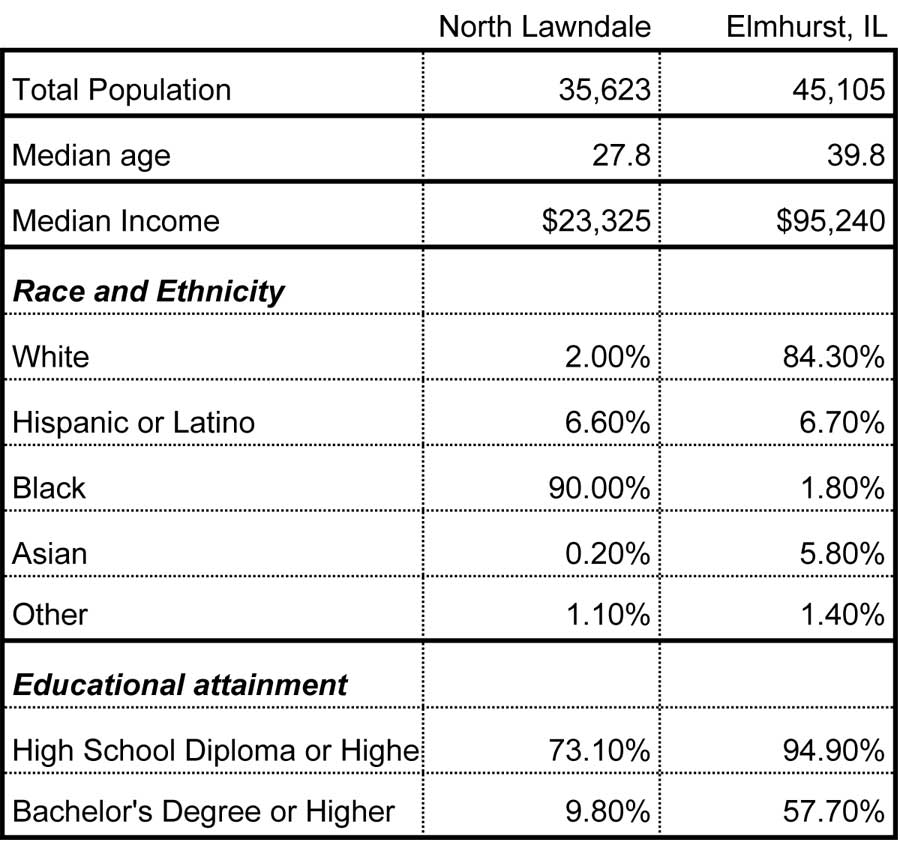
Demographics
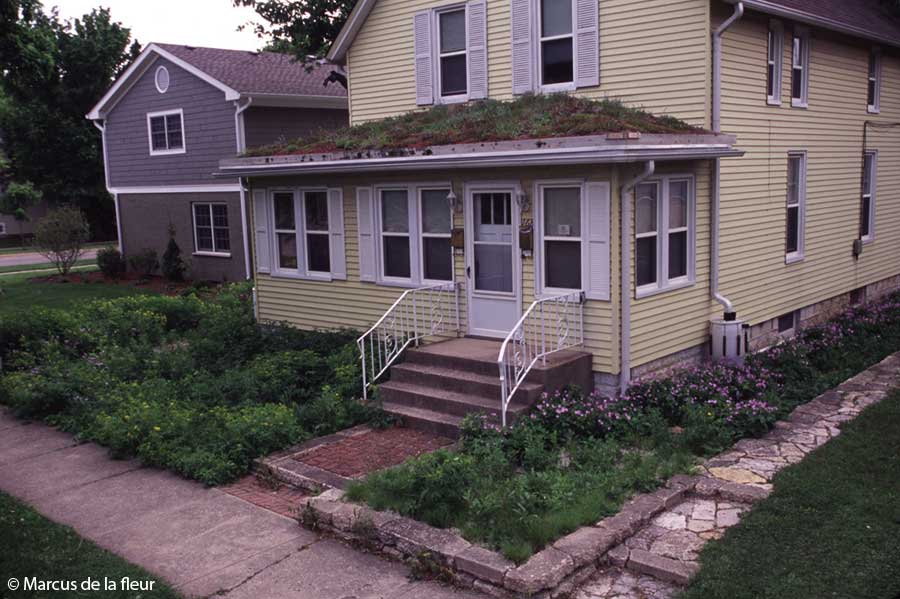
Building the parkway knee fence and rain garden cells took me down memory lane – to our sustainable pilot project, One Drop at a Time, in Elmhurst, Ill. The rain gardens, green roof, rain barrels, and porous pavement at this project caught quite a little bit of attention.
The running joke was that whenever I stepped into the front yard of the Elmhurst project I got no work done because of the questions from, and conversations with, passers-by. Thirty minutes of uninterrupted work was unheard of.
Fast forward to our Chicago project: As I mentioned in the last blog post, I began to enjoy plenty of interaction with passers-by while working on the parkway fence. By my observation, the volume of conversations, the level of curiosity, and number of compliments seemed no different than what I had experienced in Elmhurst.
Yet these two communities, North Lawndale and Elmhurst, have completely different demographics and appear to be at opposite ends in the income spectrum.
This brings me full circle and back to the quote by the late Charles Leeks, former director of the North Lawndale NHS office.
“People who live in poor communities […] are entitled to good design. I’d love to see good buildings, an aesthetically engaging place. … [A] smart, clever, interesting place to live—and one that looks good.”
In this highly segregated environment, whether it is racial or income related, it is easy to overlook that some things are universal. We all share a thirst for an expression of care in our landscape combined with physical expressions that instill beauty, and a landscape that stimulates.
Just because North Lawndale doesn’t have the resources for attractive landscapes doesn’t mean that they would not be appreciated.