Tag Archives: community

Rain garden review

The reports of emerging spring ephemerals in Germany and colorful Camellias in Madeira are hard to ignore. Contrast that with the recent blast of arctic air that rolled over us here in Chicago. Our rain garden is still in deep hibernation and blooming spring ephemerals still seem somewhere in the distant future.
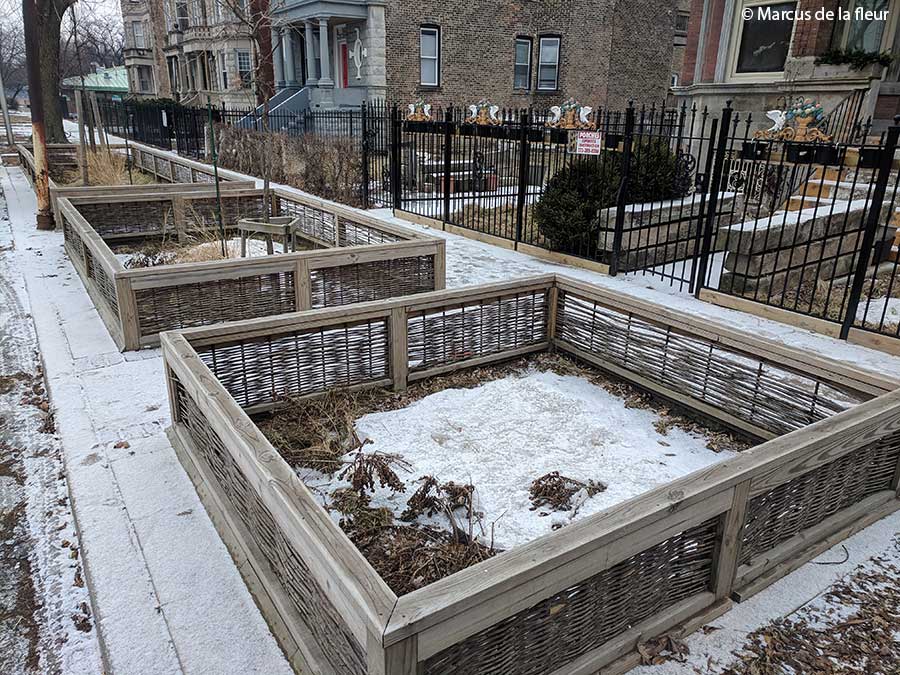
What I have at my disposal is a trip down memory lane, to stretch that little bit of sanity that is left until we are finally blessed with the elusive spring warm up.

I wrote about the timid progress on our parkway rain garden during the 2017 season. It took until late summer before we got some substantial growth. The 2018 growing season in contrast was significantly more productive and richer in diversity, colors and textures.
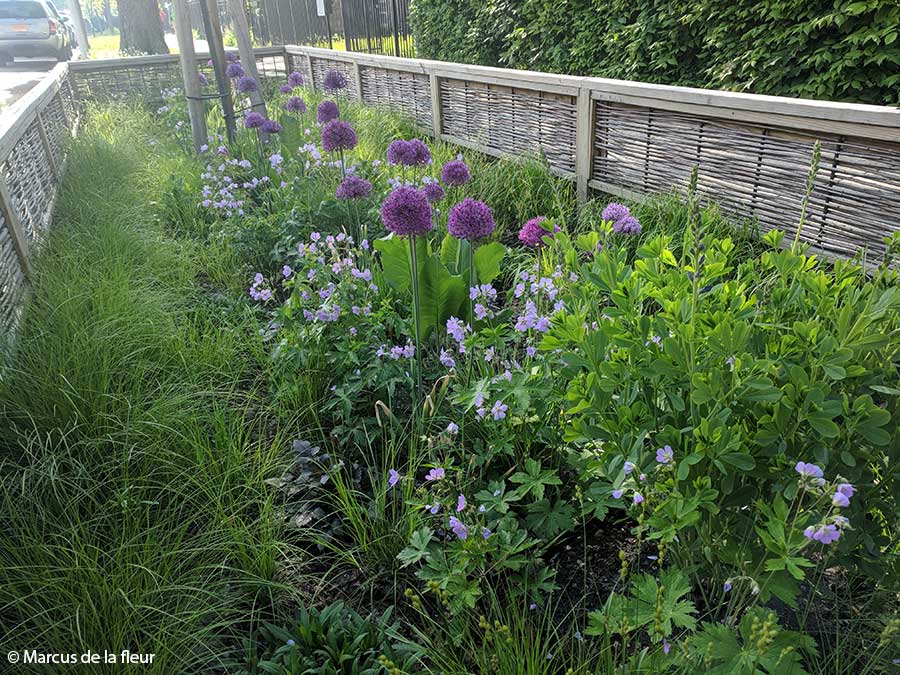
I have mentioned before that we have two schools down the street from us. Once school lets out, we have kids flying down the street with an impressive amount of raw and wild energy. It reminds me a lot of my younger self and the extraordinary resilience of my parents!
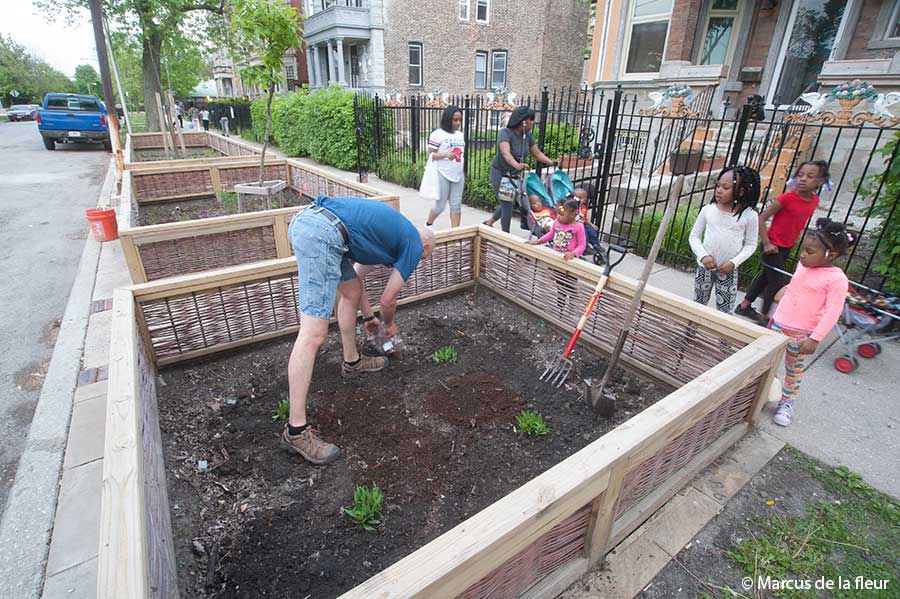
If it wasn’t for the fence, the rain garden would have been bulldozed many times over by the sheer volume of little feet. But even the fence is sometimes not enough of a signal or barrier.

When I perched myself on our front porch just before the end of the school day, I could catch the pairs of feet that prefer running across sedges and asters versus the concrete sidewalk.
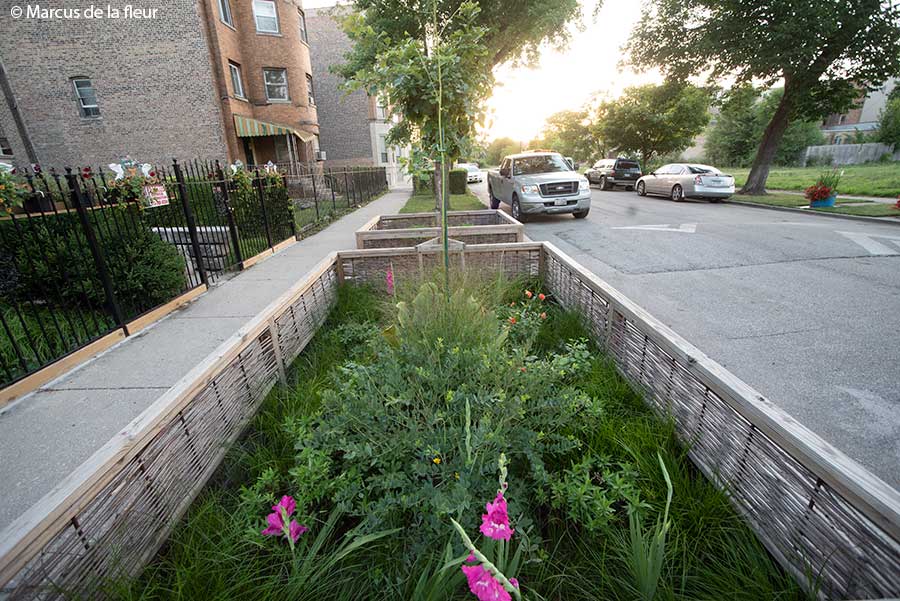
I was often amused by the interaction that pursued: It starts with the big eyes of someone that got caught. I strike up a conversation. I ask questions. I share a few facts about a plant or a flower, but I don’t lecture. Usually at this point I get the “deer in the headlights” stare. The little mind behind the eyes is racing, trying to process why they are not getting yelled at.

Aspects of our conversation appear to stick. At a minimum, the minds that are connected to the little feet remember our exchange for the next few weeks. One step up from the minimum would be if I left an impression and generated curiosity about the rain garden. And in the best case scenario, I got through to the little minds and created allies. Allies that start telling off their friends the moment they try to climb the knee fence.
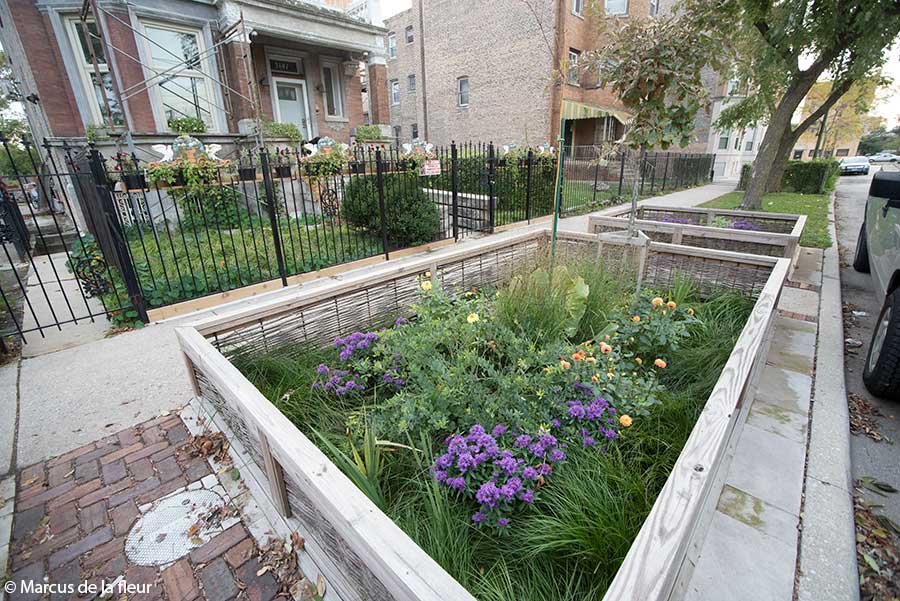
Gardening is not just for the soul or mind, it is community.
Related posts:

Blooming winter blues

The winter blues are setting in … a perfect time to think about gardening and write about design.

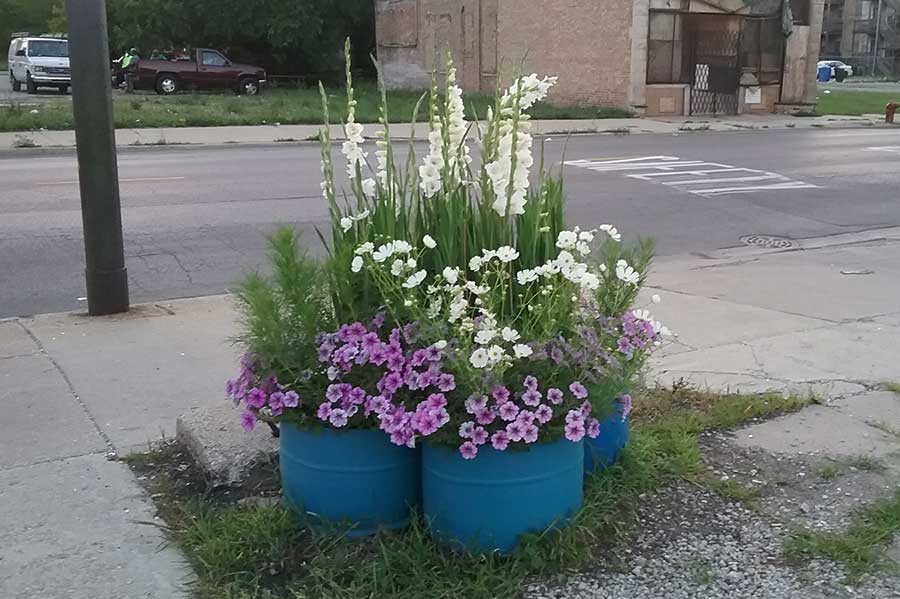
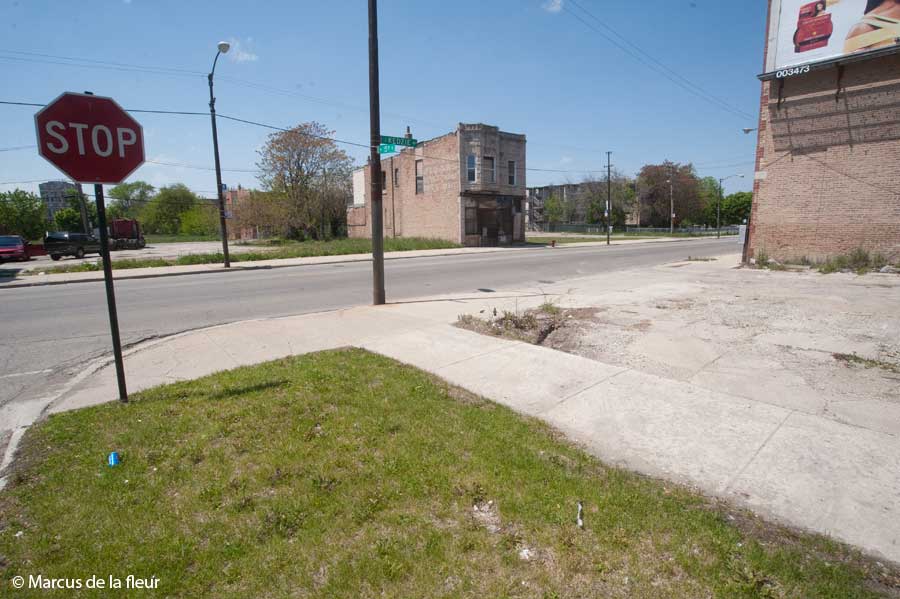
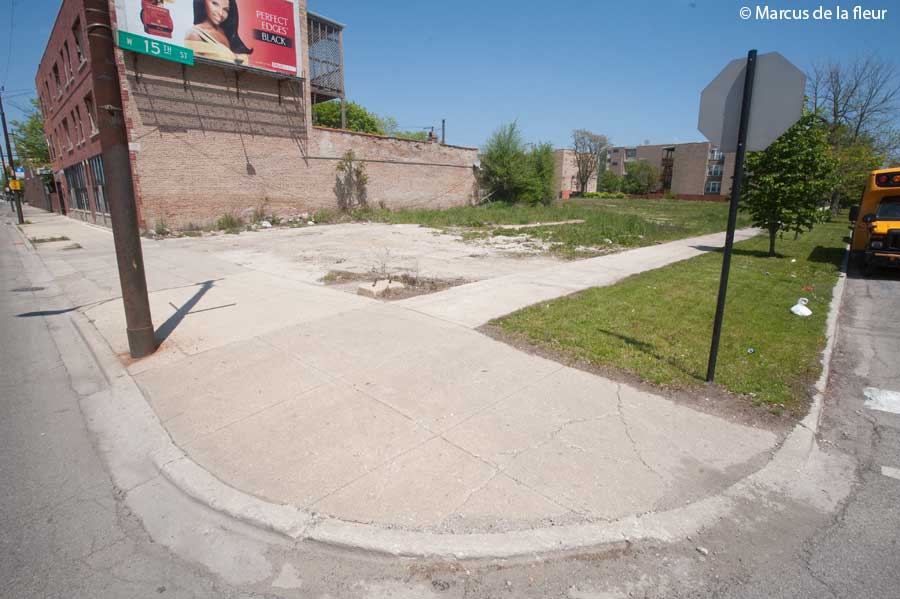
After the rain garden installation, I was interested in extending the display of care and pride towards the end of our block – the corner of Kedzie and 15th Street.

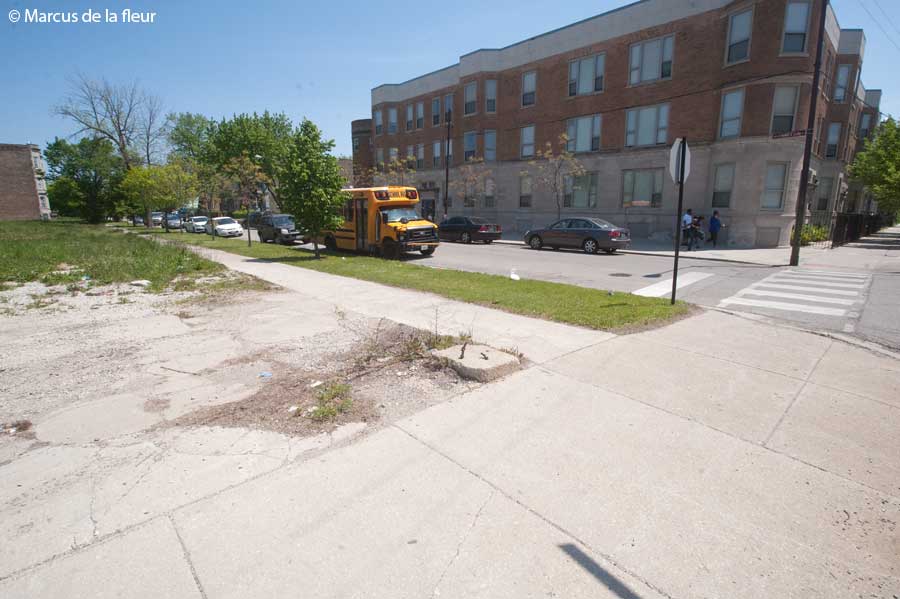
The pictures are a little misleading: This corner typically doesn’t look this clean. And because it tends to accumulate trash, and is the gateway into our street, I thought this would be the perfect spot to beautify by installing planters filled with annuals.

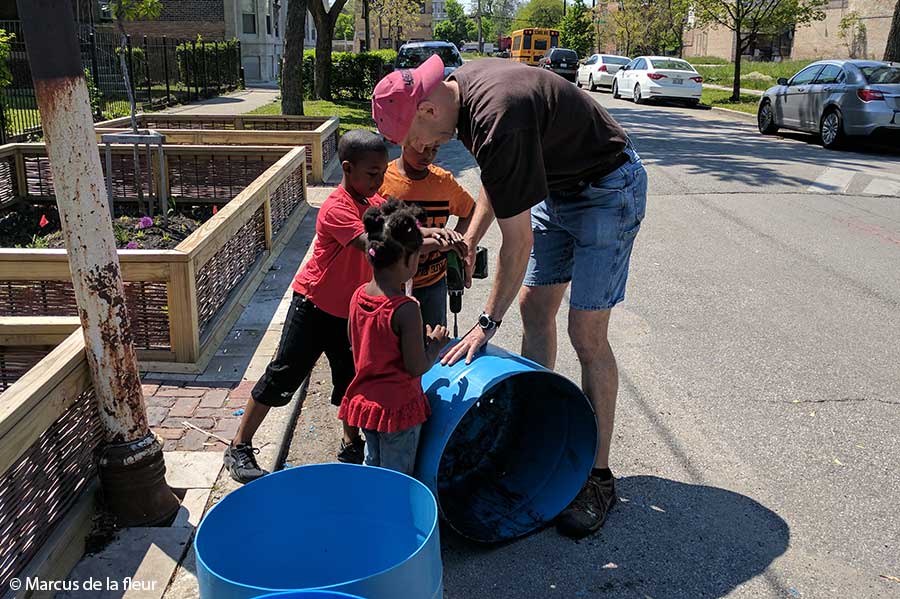
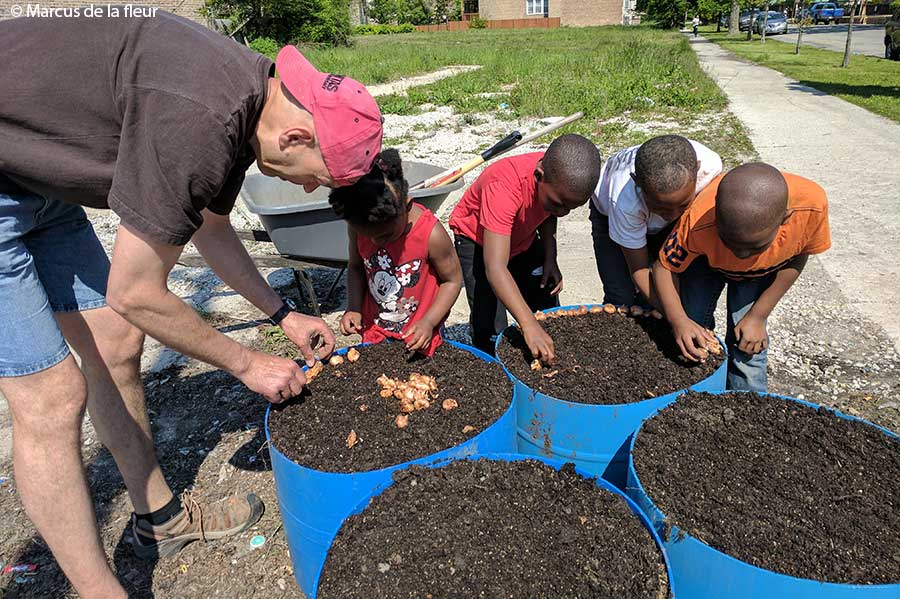
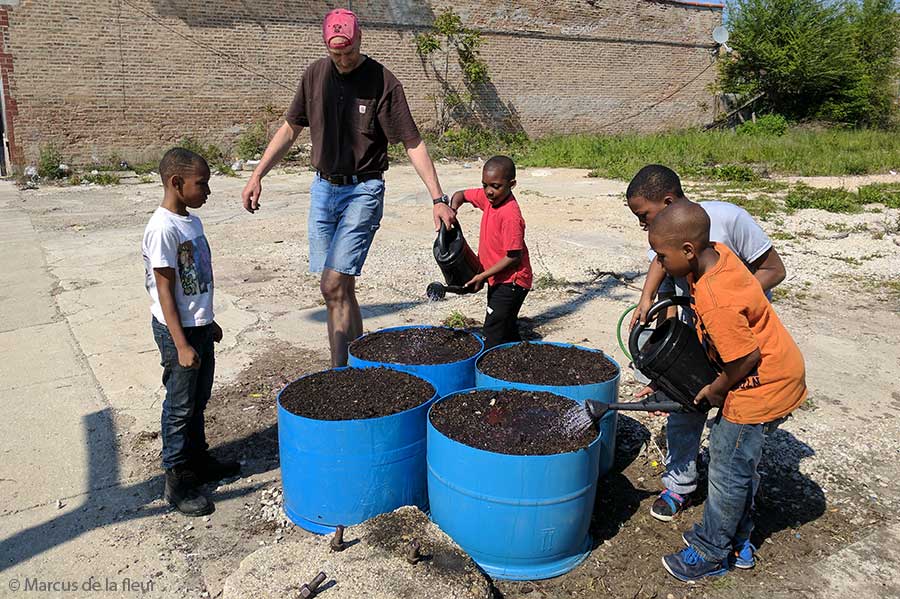
To assure the longevity of the planters and their contents, I needed some allies. And I found them in the kids on our block and adjacent blocks, most of whom attend the school just down the street.

Someone more cynical may have perceived the kids – or for that matter anyone – as potential vandals, and wouldn’t even embark on a project like this. Or they may have tried to safeguard it so thoroughly that there was nothing stimulating or enjoyable left.

The shadow of potential vandalism follows us designers on any public project. It often influences the design language. In an attempt to shield the end product, “care and pride” is sacrificed to  what could be interpreted as “we don’t trust you.” This does not foster a sense of community ownership, which starts the downward spiral.

The strategy adjustment that can correct this is fairly simple. Catherine Baker from Landon Bone Baker Architects summed it up in one beautiful sentence in an Chicago Tribune article:

“We assume the best of the neighborhood, not the worst of the neighborhood, when we design.”

I have to say that this strategy was more successful than some of my plant choices. At the end of the day, we were able to get the planters into a shape that clearly communicated care and pride, right at the gateway to our block.

Related posts:

Finishing weaving and a closing thought

In our trilogy of parkway rain gardens, I had one more cell to go, which is also the largest cell. Snow was looming on the horizon and I was hoping to finish the weaving of the fence panels before I would freeze my fingers off.

Well, I got done just in time, but I had to wait all winter before I could fully vegetate the rain garden cell. This was a test of my patience.

Demographics

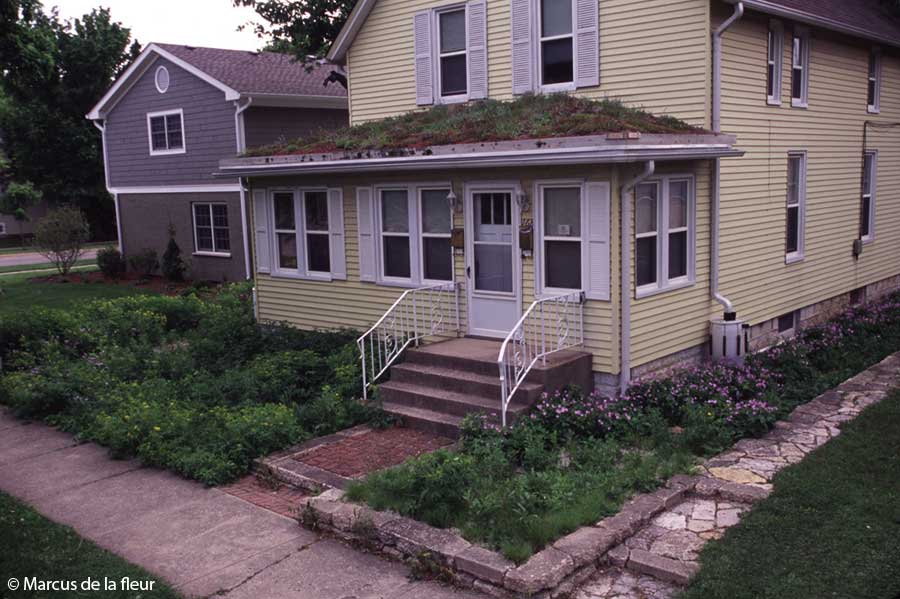
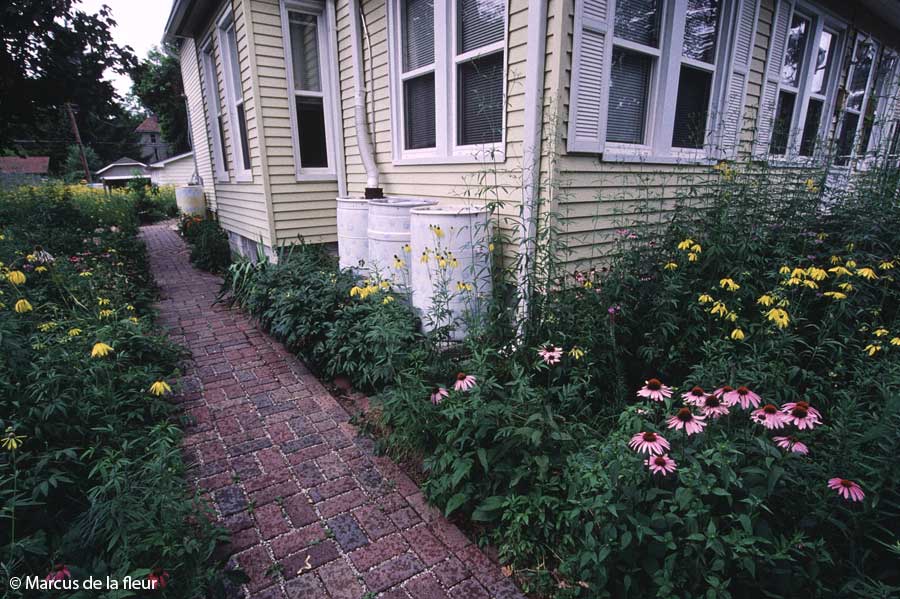
Building the parkway knee fence and rain garden cells took me down memory lane – to our sustainable pilot project, One Drop at a Time, in Elmhurst, Ill. The rain gardens, green roof, rain barrels, and porous pavement at this project caught quite a little bit of attention.


The running joke was that whenever I stepped into the front yard of the Elmhurst project I got no work done because of the questions from, and conversations with, passers-by. Thirty minutes of uninterrupted work was unheard of.

Fast forward to our Chicago project: As I mentioned in the last blog post, I began to enjoy plenty of interaction with passers-by while working on the parkway fence. By my observation, the volume of conversations, the level of curiosity, and number of compliments seemed no different than what I had experienced in Elmhurst.

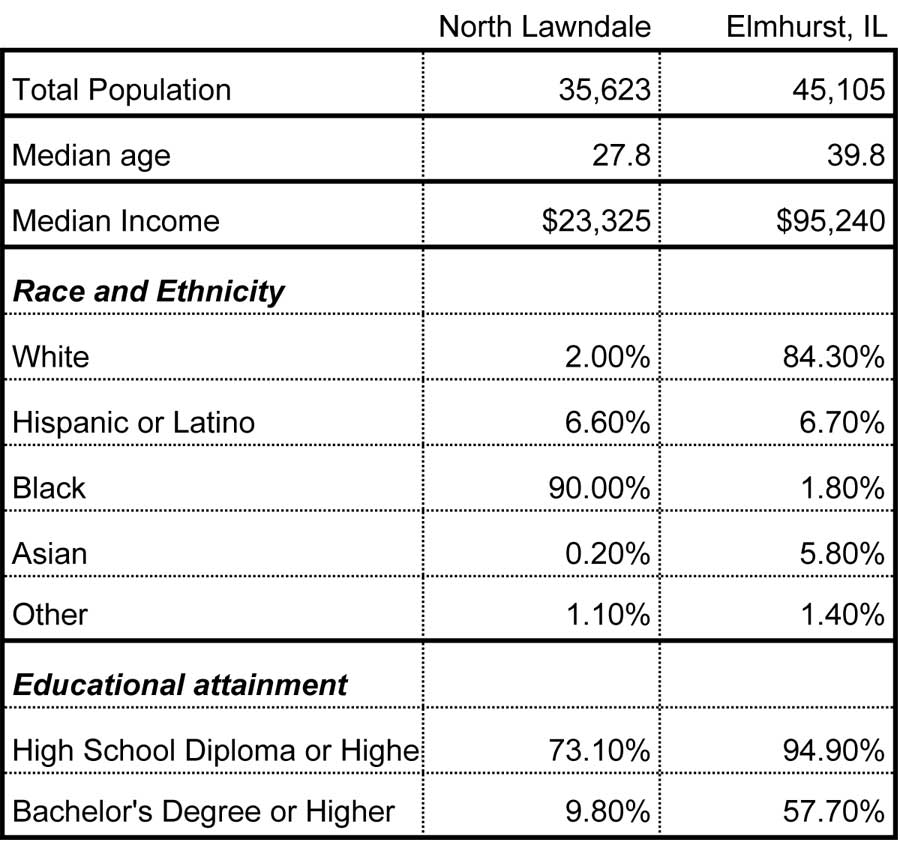
Yet these two communities, North Lawndale and Elmhurst, have completely different demographics and appear to be at opposite ends in the income spectrum.

To demonstrate the point, I picked data from the Chicago Metropolitan Agency for Planning (CMAP) Community Data Snapshots and summarized them in the table below.

For complete data set on North Lawndale, see:

http://www.cmap.illinois.gov/documents/10180/126764/North+Lawndale.pdf

For complete data set on Elmhurst, see:

http://www.cmap.illinois.gov/documents/10180/102881/Elmhurst.pdf

This brings me full circle and back to the quote by the late Charles Leeks, former director of the North Lawndale NHS office.

“People who live in poor communities […] are entitled to good design. I’d love to see good buildings, an aesthetically engaging place. … [A] smart, clever, interesting place to live—and one that looks good.”

Source: THE JOURNAL OF THE AMERICAN INSTITUTE OF ARCHITECTS

In this highly segregated environment, whether it is racial or income related, it is easy to overlook that some things are universal. We all share a thirst for an expression of care in our landscape combined with physical expressions that instill beauty, and a landscape that stimulates.

Just because North Lawndale doesn’t have the resources for attractive landscapes doesn’t mean that they would not be appreciated.

Related posts:

Talking while weaving

Even though the weather was turning cooler, I just got warmed up weaving the fence panels on our first rain garden cell in the parkway. Now that I had figured out the details and nuances, I was on a roll – or should I say loom?

And with each panel completed, our parkway landscape started to look better, even though I had nothing planted yet.

Community

We are always interested in community outreach, sharing with others what we are doing and why. We use this blog as a community outreach tool. We had several open houses where we invited the community to see our progress for themselves and ask us questions. I still accommodate groups that are interested in touring our project.

Despite all these efforts, we’ve had a hard time reaching the community closest to us, our neighbors in North Lawndale. Interest in and awareness of what we are doing to the house, and why, has grown over the years. But in the busy lives of our neighbors, and everyone’s daily struggle, the deep energy retrofit subject was not a priority. Plus, some of its aspects are rather abstract and eventually hidden behind drywall. There are few visuals that get people excited about, with the exception of our heating bill.

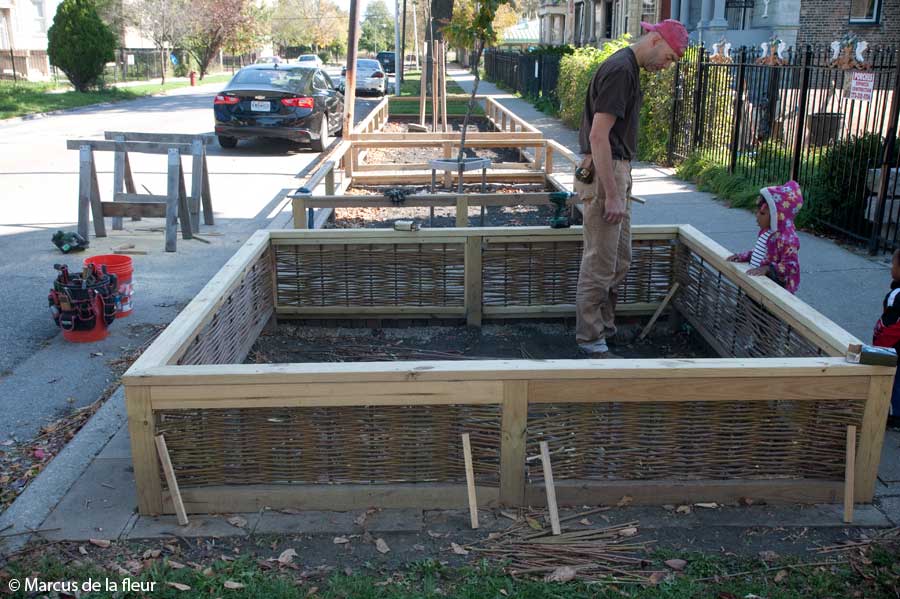
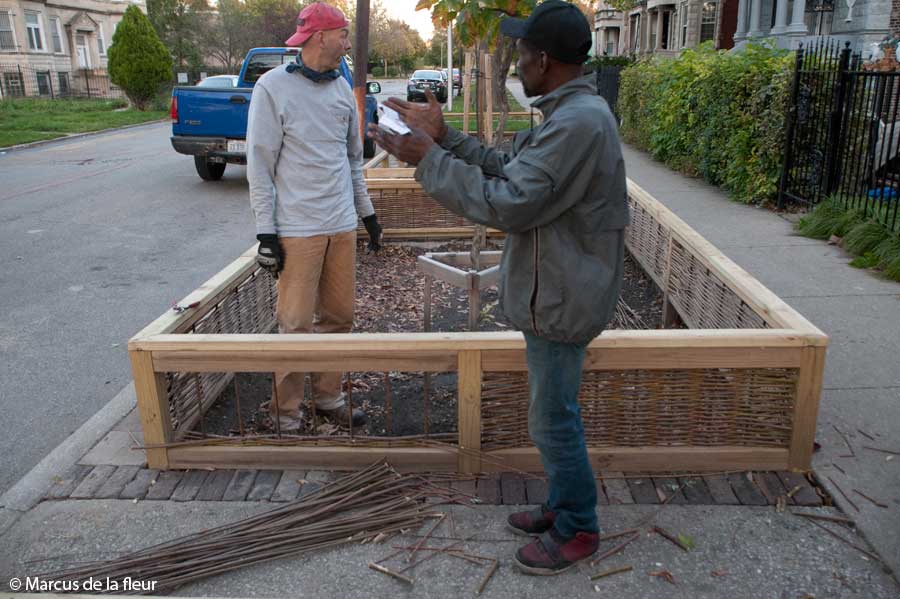
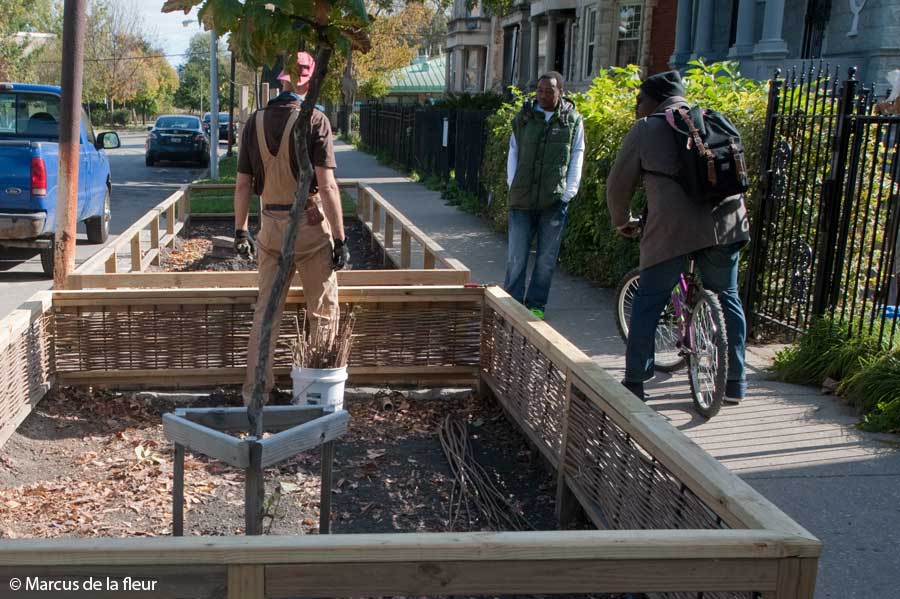
But once I started to work on the parkway rain gardens, interaction skyrocketed. I was doing stuff that was hard to overlook and that nobody expected to see in the neighborhood. Passers-by wanted to know what I was up to.


Interactions ranged from compliments on our work, to questions about what we were doing. Compliments and questions came from grown ups passing by and the kids leaving school down the street from us. A number of times, parents picking up their kids from school took them over to the parkway when I was working and asked me to explain to them what I was doing.

And of course, I mentioned the four brothers who helped me excavate the rain garden. We had some really good conversations, and they riddled me with questions until there was nothing left of me.

This was the fun part of putting the fence together, and I really enjoyed it!

Related posts:

Do you live there?

As you can imagine, this project is a big part of our lives. And we talk about it a lot. Not so much as to bore people, but our friends and neighbors frequently ask us for an update.

Just about every conversation includes the question, “Do you live there yet?”  Of course the answer to that is no. There is no electricity, no plumbing and of course no heat.  We’ll live there someday, but not anytime soon.

So where do we live?

You may recall that we had been working on a project in Elmhurst for the past few years. Last spring when we bought this building on 15th St. we clocked our travel to the city and back to Elmhurst at 45 miles, round-trip.  We did that trip many times in the spring of 2009.  That is certainly not sustainable, nor was it any help to our sanity.

We decided we really needed a place in the city … but how would we find a comforting home on a temporary basis?  One day we were at brunch with some very cool friends at their place, the HUB Housing Cooperative.  (HUB stands for “Housing for Urban Bicyclists.”)  As it turns out, they had a unit for sale and our friend Ted was interested in renting it to us.  So we moved in last Memorial Day weekend.

The HUB is a six-unit co-op right at 24th and Marshall Boulevards in the Little Village neighborhood. It’s an intentional community comprised of 11 people, 4 cats, 2 dogs, 3 worm bins and more than 50 bikes.  The group meets once a week to talk about business and there are lots of social opportunities.  I’ve known many of the people who live here for about 10 years through Critical Mass and other bicycling activities.  They are truly a great bunch.

The unit we’re living in right now is for sale.  It’s about 1,000 square feet with big windows and lots of light.  And lots of built-in friends. The kitchen looks out onto the boulevard. If you think you might be interested in buying the share of the co-op that is this unit, please let us know and we’ll pass your info along.